
How New Generation Distillation Equipment Converts Used Motor Oil into Clean Diesel
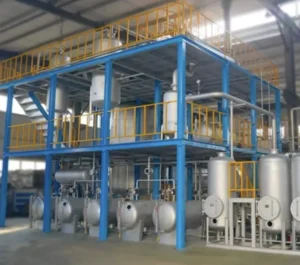
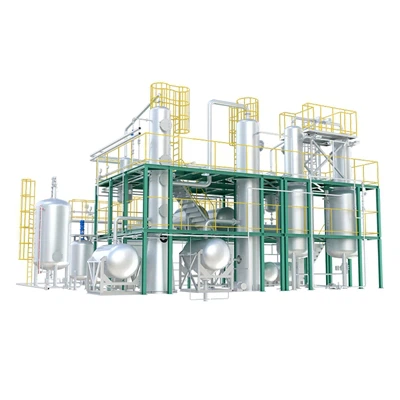
Globally, tens of millions of tons of hazardous waste, such as used engine oil and waste lubricants, are generated annually. Improper disposal can severely contaminate soil and water sources. Today, advanced waste-oil-to-diesel distillation technology provides a critical solution to this environmental challenge and opens up a commercial frontier for transforming waste into high-value energy products. Systems represented by used motor oil pyrolysis oil distillation plants,Diesel fuel from used oil distillation machines, and mini oil refinery distillation plants are becoming an important part of the circular economy.
The core principle of waste oil distillation is fractional separation. Used motor oil or pyrolysis oil is heated under high temperature and controlled vacuum conditions. Hydrocarbon substances with different carbon chain lengths are separated one by one at their respective boiling points. The diesel fraction (typically within the range of 180-420°C) is precisely condensed and collected. This process effectively removes gums, heavy metals, carbon deposits, and part of the sulfur and nitrogen compounds from the waste oil. Subsequent processes like catalytic refining ultimately produce clean diesel that meets standards.
The market offers a variety of equipment options to meet different investment and capacity needs. For instance, small modular oil refinery distillation plants, with advantages like small footprint, high automation, and relatively low investment threshold, are well-suited for regional waste oil treatment centers or startups. Their daily processing capacity can range from a few tons to tens of tons, enabling flexible deployment. Larger-scale waste oil recycling and reuse plants can establish complete processing chains-from waste oil pre-treatment and deep distillation to product refining-achieving scalable, high-efficiency continuous production. For investors with limited budgets, the market also offers used waste motor oil recycling plants that have undergone rigorous testing and refurbishment, allowing project initiation at a lower cost.
When evaluating a waste oil distillation system, key aspects should be focused on: First is feedstock adaptability-high-quality equipment should handle various sources of waste oil. Second is energy efficiency and safety-advanced systems employ efficient heating and multiple safety protection designs. Next is the yield and quality consistency of the final diesel product. Finally, environmental compliance is paramount. The system must be equipped with comprehensive tail gas (non-condensable gas) recovery and treatment, as well as wastewater purification systems, ensuring the entire production process is green and clean.
Converting used motor oil into diesel achieves a remarkable transformation from "black pollution" to "green energy." This is not only a technological innovation but also a profound practice of the concept of sustainable development. As environmental regulations become increasingly stringent and the value of energy continues to rise, investing in advanced waste oil distillation technology is undoubtedly a forward-looking choice that combines both environmental and economic benefits, contributing crucial power to building a resource-efficient society.