
The Journey of Waste Oil to Base Oil: Distillation Equipment in Used Engine Oil Refining
The Journey of Waste Oil to Base Oil: Distillation Equipment in Used Engine Oil Refining
The transformation of waste oil into valuable base oil through advanced distillation equipment represents a critical intersection of environmental sustainability and industrial innovation. This process not only addresses the growing challenge of hazardous waste disposal but also unlocks a renewable resource for lubricant production, reducing reliance on virgin crude oil.
Waste Oil Recycling: A Sustainable Feedstock
Used engine oil, classified as hazardous waste due to its toxic constituents, contains significant amounts of recoverable base oil. Globally, millions of tons of waste oil are generated annually, presenting both an environmental liability and a resource opportunity. The recycling process begins with thorough filtration to remove contaminants like metal particles and carbon deposits, preparing the oil for subsequent refining stages.
The Distillation Process: From Waste to Base Oil
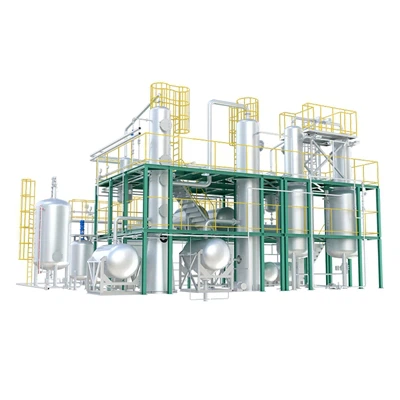
Modern waste oil recycling plants employ sophisticated distillation equipment to separate the oil into its essential components. The process typically involves:
Preheating: The waste oil is heated to prepare it for distillation
Atmospheric Distillation: Initial separation occurs at atmospheric pressure
Vacuum Distillation: Further refinement under reduced pressure
Fractional Distillation: Separation into various viscosity grades
This multi-stage process yields different base oil grades, including Group I, II, and III classifications, with Group II and III oils commanding premium prices due to their superior performance characteristics.
Waste Oil Recycling Machine Oil Refiners
Specialized equipment forms the backbone of this operation:
Distillation columns: Tall cylindrical vessels where separation occurs
Heat exchangers: To optimize energy efficiency
Condensers: To capture and recover distilled fractions
Decolorization units: For final product refinement
These refiners incorporate advanced materials and technologies to ensure durability and efficiency, with some systems featuring computer-controlled automation for precise temperature and pressure regulation.
Used Waste Motor Oil Recycling Plants
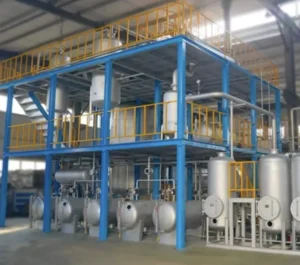
Full-scale recycling plants integrate these processes into complete systems capable of handling industrial volumes. The economic viability of these plants has improved significantly due to:
Enhanced processing technologies
Growing environmental regulations
Increased demand for sustainable base oils
The resulting base oil finds applications in automotive lubricants, industrial oils, and specialty products, completing the circular economy loop.
Conclusion
The waste oil to base oil distillation process epitomizes sustainable resource management. By converting hazardous waste into valuable industrial commodities, these systems contribute to environmental protection while meeting the growing demand for high-quality lubricants. As technology advances and environmental awareness increases, waste oil recycling is poised to play an even more significant role in the global energy and materials landscape.